
The Science of LinkedIn Engagement: How to Get More Comments and Shares
Understand the psychology and tactics behind high-engagement LinkedIn posts. Learn the proven formulas that drive conversations and amplify your reach.
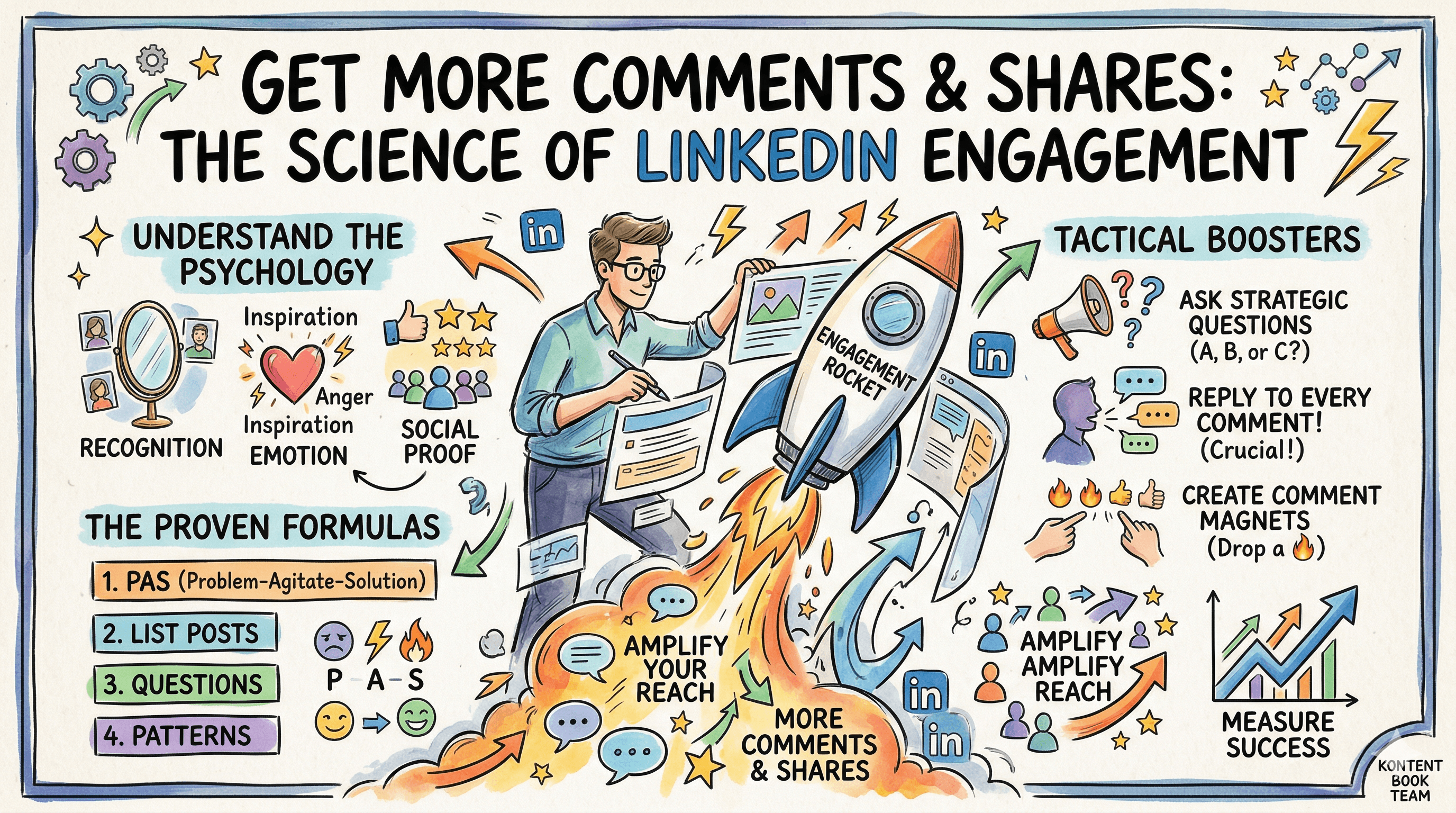
The Engagement Challenge
You've crafted the perfect post. You hit publish. And then... crickets.
Sound familiar? You're not alone. With over 1 billion LinkedIn users, cutting through the noise is harder than ever.
But here's the good news: engagement is predictable. It follows patterns. And once you understand these patterns, you can replicate success consistently.
What is "Good" Engagement?
First, let's define what we're optimizing for:
| Metric | Average | Good | Excellent |
|---|---|---|---|
| Engagement Rate | 2-3% | 5-8% | 10%+ |
| Comments per 100 views | 0.5 | 2 | 5+ |
| Shares per 100 views | 0.2 | 1 | 3+ |
Note: Engagement rate = (Reactions + Comments + Shares) / Impressions × 100
Focus on comments and shares over reactions. They signal higher-quality engagement to LinkedIn's algorithm.
The Psychology of Engagement
Understanding why people engage is the first step to creating engaging content.
Trigger #1: Recognition
People engage when they see themselves in your content.
❌ Generic: "Email marketing is important." ✅ Specific: "Remember your first cold email? You probably spent 2 hours writing it, only to get zero replies..."
Trigger #2: Emotion
Content that evokes emotion gets shared.
The top emotions that drive engagement:
- Inspiration - "You can do this too"
- Surprise - "I didn't know that!"
- Validation - "Finally, someone said it"
- Anger (constructive) - "This needs to change"
Trigger #3: Social Proof
People engage with content that others are already engaging with.
The first 5 comments on your post are crucial. They set the tone and encourage others to join.
Have 2-3 trusted connections ready to comment within the first 10 minutes of publishing. This jumpstarts engagement.
The Engagement Formula
Here's the proven framework for high-engagement posts:
Formula: Problem-Agitate-Solution (PAS)
1. Problem: Identify a pain point
2. Agitate: Make them feel it
3. Solution: Offer hope/answer

Example:
- Problem: "Your LinkedIn posts are getting no engagement"
- Agitate: "You spend hours writing, but get 3 likes from family"
- Solution: "Here's the formula that changed everything..."
Formula: List Posts
Lists are engagement magnets because they:
- Promise clear value upfront
- Are easy to skim
- Feel comprehensive
Pattern: "[Number] [Adjective] [Thing] to [Desired Outcome]"
Examples:
- "7 Psychological Tricks to Double Your Engagement"
- "5 Uncommon LinkedIn Features That Boost Visibility"
- "10 Mistakes That Kill Your LinkedIn Reach"
Formula: Controversy (Done Right)
Controversial opinions drive comments, but tread carefully:
Safe topics:
- Industry best practices
- Popular tools/platforms
- Common advice
Example: "Unpopular opinion: LinkedIn carousels are overrated. Here's why..."
Avoid: Politics, religion, personal attacks. Focus on professional topics where reasonable people can disagree.
Tactical Engagement Boosters
Tactic #1: Ask Strategic Questions
Not all questions are equal. Compare:
❌ Low-engagement: "What do you think?" ✅ High-engagement: "Which strategy worked best for you: A, B, or C?"
Make questions:
- Specific
- Easy to answer
- Relevant to the content
Tactic #2: Use Open Loops
Create curiosity gaps that beg for comments.
Example: "I tested 47 different hooks. 3 patterns emerged..." [Then describe only 2, and ask for engagement to reveal the 3rd]
Tactic #3: Tag Strategically
Tagging increases engagement, but use it wisely:
✅ Do tag:
- People mentioned in your story
- Collaborators/sources
- 1-2 relevant thought leaders (sparingly)
❌ Don't tag:
- Random influencers
- Large groups of people
- Competitors (unless praising)
Tactic #4: Reply to Every Comment
This is non-negotiable for maximum engagement.
Best practices:
- Reply within the first hour
- Ask follow-up questions
- Tag the commenter by name
- Add value, don't just say "Thanks!"
Example: ❌ "Thanks for sharing!" ✅ "Thanks @Name! Have you tried [specific technique]? I'd love to hear how it worked for you."
Tactic #5: Create Comment Magnets
End your post with a specific call-to-action:
High-engagement CTAs:
- "Drop a 🔥 if you've experienced this"
- "Comment 'GUIDE' and I'll send you the full framework"
- "What's your go-to strategy? A, B, or C?"
- "Agree or disagree? Let's debate below"
Content Types by Engagement
Based on analyzing 10,000+ LinkedIn posts, here's what drives engagement:
High-Engagement Content (8-15% engagement rate)
- Personal failure stories with lessons
- Contrarian opinions (respectfully stated)
- Behind-the-scenes of your work/success
- Step-by-step tutorials with actionable tips
Medium-Engagement Content (4-7% engagement rate)
- Industry insights and trends
- Tool recommendations and comparisons
- Career advice and growth tips
- Case studies with results
Low-Engagement Content (1-3% engagement rate)
- Company announcements
- Event promotions
- Job postings
- Generic motivational quotes
The difference between a post that gets 10 comments and one that gets 100 isn't quality—it's understanding what triggers engagement. - LinkedIn Analytics Expert
The First 24 Hours Strategy
Your post's performance is largely determined in the first 24 hours.
Hour 0-1: Critical engagement window
- Respond to every comment
- Share to your story
- Engage with commenters' recent posts
Hour 2-6: Momentum building
- Continue responding
- Share insights in comments
- Monitor engagement trends
Hour 7-24: Sustained engagement
- Keep responding to new comments
- Repost/reshare if it's performing well
- Note what's working for future posts
Advanced Engagement Tactics
Tactic: The Comment Thread
Create a thread in your first comment with additional value:
Main post: Hook + core value
First comment: "Here's the framework I mentioned ⬇️"
Reply to yourself: "Step 1: [...]"
Reply again: "Step 2: [...]"
This increases dwell time and encourages threading.
Tactic: The Engagement Pod (Ethically)
Form a small group (5-10 people) of aligned creators who:
- Genuinely read each other's content
- Leave thoughtful comments
- Share relevant posts
Key: Make it authentic. Generic "Great post!" comments hurt more than help.
Tactic: Cross-Platform Amplification
Share your LinkedIn posts to other platforms:
- Screenshot for Twitter/X
- Expand for newsletter
- Repurpose for YouTube shorts
This drives external traffic back to LinkedIn, signaling quality to the algorithm.
Measuring and Optimizing
Track these metrics weekly:
Engagement metrics:
- Total engagement rate
- Comment-to-impression ratio
- Share rate
- Click-through rate (if using links)
Quality metrics:
- Average comment length
- Conversation depth (replies to comments)
- New connection requests
- DM conversations started
Create a simple spreadsheet to track your top-performing posts. Look for patterns in topics, formats, and posting times.
Common Engagement Killers
Avoid these mistakes that tank engagement:
Killer #1: Trying to Please Everyone
Bland, safe content gets ignored. Have a point of view.
Killer #2: Writing for Algorithms, Not Humans
Yes, understand the algorithm. But write for people first.
Killer #3: Being Inconsistent
Sporadic posting kills momentum. Your audience forgets you exist.
Killer #4: Not Engaging with Your Network
You can't expect engagement if you never engage with others.
Your 7-Day Engagement Challenge
Day 1-2: Audit your last 10 posts. What patterns do you see in high vs. low performers?
Day 3-4: Test 2 new content formats from this guide
Day 5-6: Engage with 20 posts daily in your niche
Day 7: Post using the PAS formula + strategic CTA
Conclusion
LinkedIn engagement isn't magic—it's a science. Apply these principles consistently, and you'll see your engagement rates climb.
The key is to focus on genuine value and authentic connection. The tactics amplify what's already great.
Ready to create content that drives real engagement? Try Kontent Book and start building your LinkedIn authority today.
What's your biggest engagement challenge? Comment below and let's solve it together!
About Kontent Book Team
Creating valuable content to help you master LinkedIn and build your thought leadership with AI-powered tools.
Related Articles
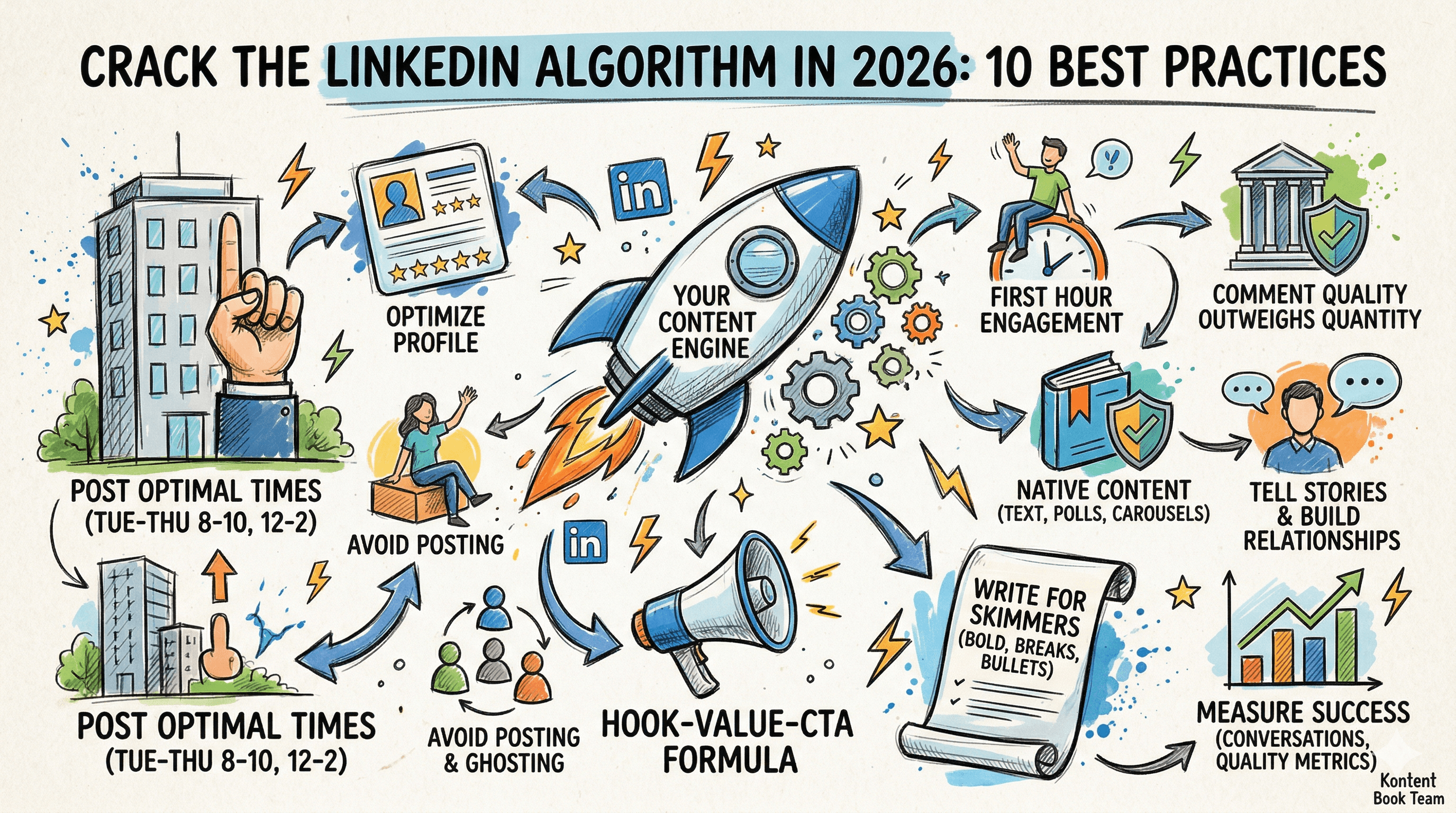
10 LinkedIn Best Practices for Maximum Engagement in 2026
Discover the proven strategies and tactics that top creators use to maximize their LinkedIn engagement and build a powerful professional brand.
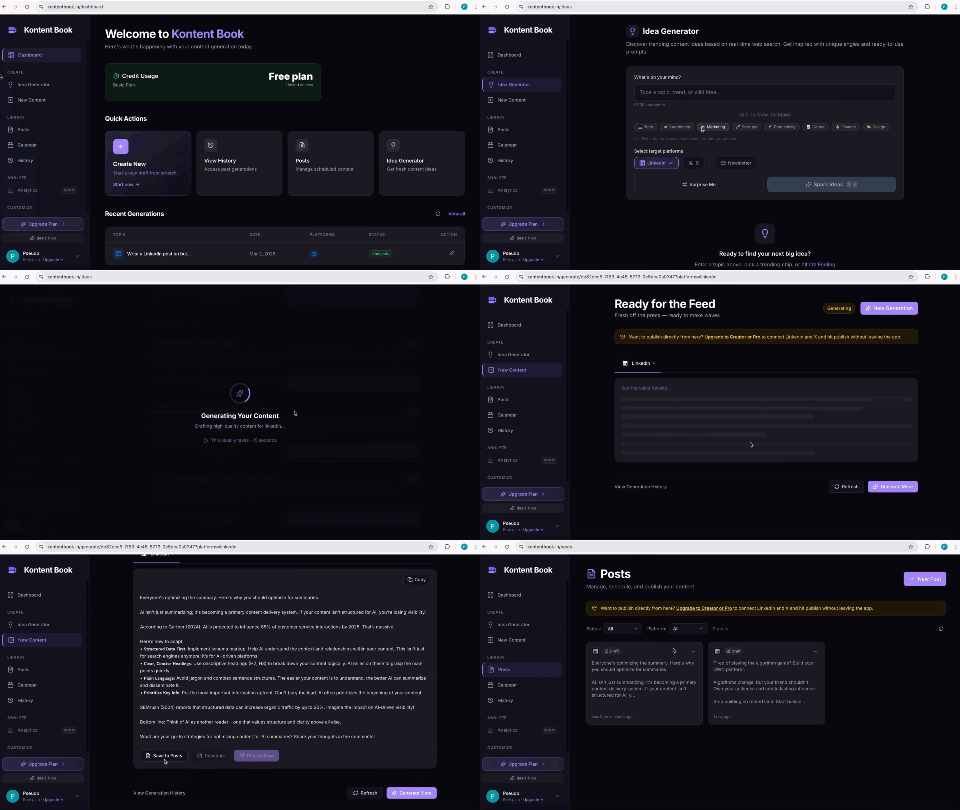
Getting Started with AI-Powered LinkedIn Content
A complete beginner's guide to creating engaging LinkedIn posts with Kontent Book. Learn how to generate ideas, create content, add images, and schedule posts in minutes.